


My Health at Vanderbilt
4.71.26K Reviews
App Specs
- Version
- 11.8.3
- Updated On
- License
- Free
- Downloads
- 100,000+
- Developer
- Vanderbilt University Medical Center
- Categories
- Medical
- Platform
- Android
Screenshots
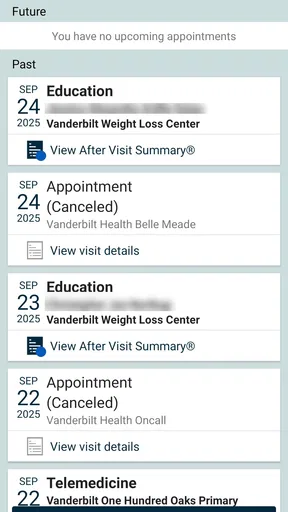
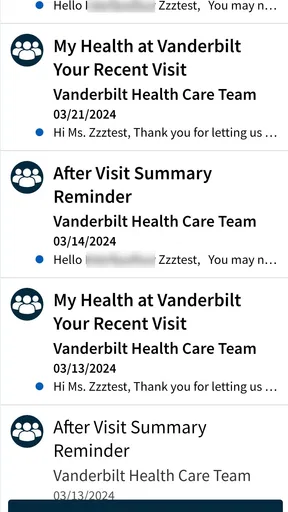
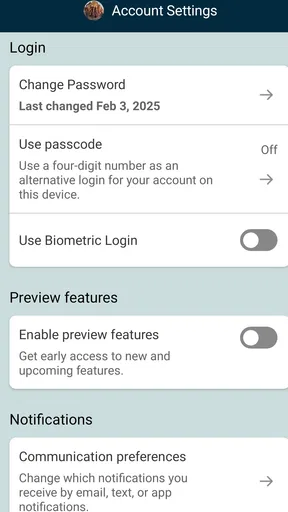
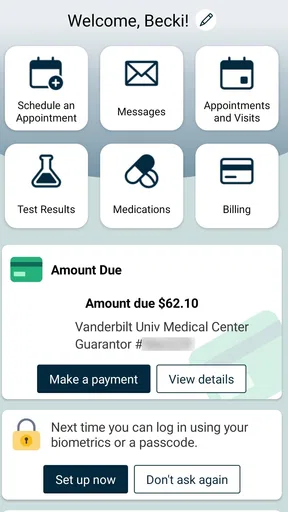
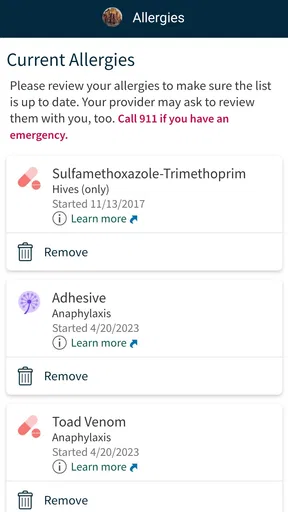
 Analysis by AppCompare
I find My Health at Vanderbilt most useful when I treat it as a practical front door to my care rather than as a complete replacement for every health service. Developed by Vanderbilt University Medical Center, this free medical app is designed to put personal health information within easier reach. In everyday use, that means less searching through old messages, fewer paper notes to keep track of, and a more organized way to prepare for conversations with a care team.
Its appeal is straightforward: if your healthcare is connected with Vanderbilt, having a digital route to your records can make ordinary tasks feel less scattered. The app is rated for Everyone, runs on devices using iOS 11 or later, and its current version is 11.7.2. Those details matter because health apps are often used by families, older adults, and people managing care on behalf of someone else, so accessibility and a familiar mobile workflow are more important than flashy extras.
How I use it as a daily health-record workflow
My preferred starting point is simple. I open the app when I need to check information related to my care, then use the available record tools as the source of truth instead of relying on memory or a loose collection of screenshots. That habit is especially helpful before an appointment. I can review what I already know, identify something I need to ask, and avoid spending the first few minutes trying to reconstruct the last visit.
The best use case is not necessarily an emergency or a complicated medical question. It is the small, repeated moments between appointments: checking a detail after a visit, preparing a list of questions, or making sure I have the relevant information in front of me when speaking with a healthcare professional. A patient portal app earns its place when it reduces this kind of friction without demanding much attention.
I also like the idea of using it as a preparation tool rather than opening it only when something goes wrong. Before a scheduled appointment, I would make a short note of symptoms, changes, and concerns outside the app, then use the information available in My Health at Vanderbilt to keep that note grounded in the record. This separates personal observations from documented medical information, which can make a conversation clearer.
That distinction is important. The app can help me access and organize my healthcare information, but it does not turn a phone into a clinician. I would not use it to diagnose a new symptom, decide whether a situation is urgent, or replace emergency services. For anything time-sensitive or severe, direct medical help is the appropriate choice.
In my experience, the most reliable routine is to check the app at a calm moment rather than while rushing out the door. I can confirm what I need, read carefully, and write down follow-up questions. This is a small change, but it prevents the common mistake of opening a medical record while distracted and remembering only half of what I saw.
Worth Reading Before You Choose

EA SPORTS FC Mobile 26 Is a Bigger Football Game, but It Takes Time

Flipboard Shows What News Apps Must Do Beyond the Feed

Switching to Android Auto Means Rethinking Your Driving Routine

Google Calendar Makes a Crowded Week Easier to Manage

Ludo King Makes the Most of the Minutes Between Plans

Baby Panda World Brings Quick Play to Modern Phones, but Its Game Library Feels Busy
Settings and habits that make the app easier to live with
Health apps deserve a different kind of setup than entertainment apps. I would begin by checking the device’s general security settings, including the screen lock and whether notifications reveal more information than I want visible. A phone can be private in one situation and shared in another, so notification previews deserve attention even when the app itself is secure.
I would also review the app’s notification behavior and keep only alerts that genuinely help me act. Too many reminders can make important messages blend into ordinary phone noise. On the other hand, turning everything off without thinking can make it easier to miss something relevant. The right balance depends on how often I check the app manually and whether I am actively waiting for information connected with care.
Another useful habit is keeping the phone’s operating system current enough for the app’s stated minimum requirement. Since My Health at Vanderbilt supports iOS 11 and later, an older device may technically meet the requirement but still feel slow or awkward compared with a newer phone. I would not judge the medical service by an aging handset alone, but I would recognize when the device is creating the friction.
For family members who are less comfortable with smartphones, I would set up a repeatable path instead of explaining every screen at once. Place the app where it is easy to find, make sure the person knows the device passcode, and practice the few actions they actually need. A short routine is more useful than a long tour of every possible menu.
I would be careful with shared devices. A family tablet may be convenient, but health information should not be left open where another person can casually see it. Logging out when appropriate and using the device’s own privacy controls are sensible habits. These are not glamorous features, but they matter more in a medical app than visual polish does.
One practical tip is to keep a written list of questions outside the app before opening a record. The app can show me information, but it cannot know which detail has been worrying me since the last appointment. Combining the record with my own short checklist helps prevent passive scrolling, where I read everything but leave without resolving the issue that brought me there.
Faster patterns for appointments and follow-up
Experienced use is mostly about repetition. I would create a consistent sequence: open the app, review the relevant record area, note anything unfamiliar, and then close it once the task is complete. This is faster than browsing without a goal, and it reduces the chance of confusing old information with something connected to the current visit.
For an appointment, I would prepare in three passes. First, I would identify the reason for the visit in plain language. Second, I would look at the available information that relates to it. Third, I would write down questions that remain. This workflow makes the app part of a broader process instead of expecting it to provide all the context by itself.
After a visit, I would return when I have enough time to read carefully rather than checking repeatedly every few minutes. If the app presents new information, I would compare it with what I remember being discussed and ask the care team about anything that seems unclear. That is a better use of a portal than treating every entry as self-explanatory.
My Health at Vanderbilt can also be useful when moving between phone-based and in-person conversations. I can use the phone to prepare, then focus on the appointment rather than trying to remember every detail from the record. Later, I can use the same routine to review what changed. The benefit is not speed alone; it is continuity.
There is a trade-off here. Mobile access is convenient, but a phone screen is not always the best place to study complicated information. If I need to compare several details or think through a long history, a larger screen or a conversation with a healthcare professional may be better. I see the app as the quick-access layer, not automatically the most comfortable reading environment.
Another faster pattern is to use the app only for a defined question. For example, instead of opening it with the vague thought that I should “check my health,” I would decide whether I am preparing for a visit, reviewing a recent update, or looking for a specific record detail. This makes the experience more focused and helps me recognize when the app cannot answer the question I actually have.
Where the app helps, and where its limits become clear
The strongest reason to choose this app is its connection with Vanderbilt University Medical Center. That connection gives it a clear purpose for people whose care is handled through that system. A general health diary can help track personal notes, and a generic file-storage app can hold documents, but those alternatives do not serve the same role as a healthcare portal connected to a provider.
That also creates the main limitation. If my care is spread across unrelated healthcare organizations, one provider-specific app may not give me a single, complete picture. I might still need other portals, documents, or a personal health-record method to keep everything together. Someone looking for a universal medical organizer should understand that a hospital-connected app is naturally strongest inside its own care environment.
I would also avoid expecting it to replace direct contact with a care team. A record can show information, but interpretation belongs in the right clinical context. If I am unsure what a result, instruction, or change means, the responsible next step is to ask the relevant professional rather than making a conclusion from a screen.
Another limitation is that convenience depends on account access and device comfort. A person who rarely uses a smartphone may find a patient portal more tiring than a phone call or an in-person explanation. In that situation, the app can still be useful as a secondary tool, but it should not become a barrier to receiving care.
Privacy is another reason to be deliberate. I would not open the app on a public screen, leave it unlocked, or forward sensitive information casually. The fact that the app is free does not make the information inside it casual. Its medical category means the user should bring the same care to device security that they bring to physical paperwork.
The app has been available since May 18, 2016, and its current version is 11.7.2. I read that as a sign that it is an established service rather than a brand-new experiment, while still remembering that an established app can feel different depending on the phone, operating system, and the user’s expectations. The experience is likely to be most satisfying for someone who values access and organization over novelty.
Its audience is broad: the age rating is Everyone, and the app has passed the threshold of more than one hundred thousand installs. Its average rating is 4.7 from roughly two and a half thousand ratings, with around one and a third thousand written reviews. Those figures suggest that many users find the concept valuable, but they do not remove the need to decide whether Vanderbilt is the healthcare provider I actually use.
Who should choose it and who should look elsewhere
I would recommend My Health at Vanderbilt to patients who receive care through Vanderbilt University Medical Center and want a more dependable way to stay connected with their health information. It is particularly suitable for people who prepare carefully for appointments, prefer checking details on their own schedule, or want a repeatable digital routine instead of relying on memory.
It may also suit a family member helping someone organize care, provided privacy and account boundaries are handled responsibly. The value in that situation comes from reducing confusion: knowing where to begin, checking information before a conversation, and keeping questions together. The app is not a substitute for the family member’s judgment or the patient’s care team, but it can make coordination less scattered.
I would be less enthusiastic for someone whose main need is symptom tracking, fitness measurement, medication reminders across many providers, or a unified record from multiple health systems. A dedicated tracker or broader personal health organizer may be a better match for those tasks. Choosing the right category matters more than choosing the app with the highest general reputation.
I would also suggest caution for anyone who wants instant answers to medical concerns. A patient portal is useful for access and communication, but it is not designed to turn uncertainty into a diagnosis. If that is the expectation, disappointment is almost guaranteed, and the person may delay getting appropriate help.
My verdict after building a repeatable routine
My Health at Vanderbilt succeeds because it focuses on a practical need: giving Vanderbilt patients a mobile way to stay closer to their healthcare record. I appreciate that its usefulness grows with good habits. Checking it before an appointment, limiting distractions, protecting the phone, and writing questions first can make the experience much more effective than simply opening it whenever anxiety appears.
I would not call it a universal health-management solution, and I would not use it as a replacement for professional advice or urgent care. Its best role is narrower and more realistic: a provider-specific companion for reviewing information, preparing for conversations, and keeping everyday healthcare tasks from becoming unnecessarily disorganized.
Because it is free and rated for Everyone, the barrier to trying it is low for eligible patients. The more important question is whether Vanderbilt University Medical Center is part of my care. If it is, I think the app is worth adopting as a regular tool rather than an emergency download. If it is not, a broader alternative will probably give me a more complete view of my health.
My final recommendation is to use it with intention. Set up a private phone routine, decide what question you are trying to answer, review the relevant information, and take unresolved concerns to the appropriate healthcare professional. The real strength is not replacing care; it is making the care I already receive easier to follow, prepare for, and revisit.
Pros
- Secure access to Vanderbilt Health records
- appointments
- and test results.
- Easy prescription refill requests and medication information in one place.
- Direct messaging helps connect patients with their care teams.
- Useful access to billing details and online payment options.
- Supports health management from a phone without calling the clinic.
Cons
- Some features may be unavailable for certain Vanderbilt providers or departments.
- Account setup can require identity verification and existing patient information.
- Notifications may not always arrive immediately for new results or messages.
- The app is mainly useful to Vanderbilt patients
- limiting its broader appeal.
- Performance and availability may vary during maintenance or high traffic.
FAQs for My Health at Vanderbilt
What is My Health at Vanderbilt?
My Health at Vanderbilt is Vanderbilt University Medical Center’s patient portal app for Android and iOS. After signing in, patients can review parts of their medical record, manage appointments, read messages from care teams, view test results, request prescription refills, and access billing information. Available features can vary depending on your Vanderbilt relationship, clinic, age, and the type of care you have received.
How do I sign in to My Health at Vanderbilt?
You generally need an active My Health at Vanderbilt account and your login credentials to use the app. New patients may be able to create an account through Vanderbilt’s enrollment process, while some users may need an activation code or identity verification. If you forget your password or cannot access your account, use the recovery options in the app or contact Vanderbilt support rather than creating multiple accounts.
Can I use the app to schedule appointments and communicate with my doctor?
In many cases, the app lets eligible patients request or manage appointments, view upcoming visits, and exchange secure messages with participating Vanderbilt care teams. However, appointment availability and messaging options depend on the department, provider, and type of visit. The app should not be treated as an emergency communication channel; call emergency services or seek immediate care for urgent or life-threatening symptoms.
Does My Health at Vanderbilt show test results and medical records?
The app can provide access to available portions of your Vanderbilt medical information, including laboratory results, visit summaries, medications, immunizations, and other records supported by the portal. Results may appear as soon as they are released, sometimes before your clinician has discussed them with you. If a result is confusing, delayed, or missing, contact your care team for an accurate explanation.
Is My Health at Vanderbilt free and secure to use?
The app is generally free to download, although normal mobile data charges may apply and healthcare services accessed through it can still involve insurance or other costs. It uses account authentication and security protections designed for handling personal health information, but you should still protect your password, enable device security, avoid public Wi-Fi when possible, and sign out of shared devices. Always install the official app from a trusted store.


